Infrastructure asset managers face the ongoing challenge of balancing finite operational budgets with the urgent need to maintain aging civil, industrial, and marine facilities. Submerged assets—such as bridge piers, port terminals, municipal intake pipelines, and water storage cells—are easily overlooked because they remain out of sight. However, neglecting underwater infrastructure routinely leads to unexpected structural failures, emergency shutdowns, regulatory fines, and astronomical repair bills.
Implementing proactive subsea inspection and preventive maintenance programs yields exceptional long-term return on investment (ROI). By detecting minor material defects, concrete spalling, and scour erosion early, asset owners can execute low-cost localized repairs, extending total asset service life by decades and avoiding catastrophic capital losses.
Financial Dynamics: Proactive vs. Reactive Maintenance
The cost of emergency subsea repairs vastly exceeds the investment required for scheduled preventive maintenance programs. Examining the financial dynamics highlights the tangible value of routine underwater asset care.
Avoiding Catastrophic Structural Failures
When steel bulkheads collapse or dock pilings fail unexpectedly, facility operations grind to a complete halt. Emergency repairs require premium mobilization fees, expedited material costs, and round-the-clock labor, often costing five to ten times more than planned preventive maintenance.
Eliminating Revenue Loss from Unplanned Downtime
In commercial ports, industrial manufacturing plants, and power generation facilities, operational downtime directly destroys daily revenue. Scheduled subsea maintenance allows asset managers to plan repairs during low-volume seasonal windows, eliminating unexpected revenue losses caused by sudden asset failures.
Investing in certified Underwater Construction services allows facility managers to shift from expensive reactive firefighting to predictable, cost-effective proactive asset management.
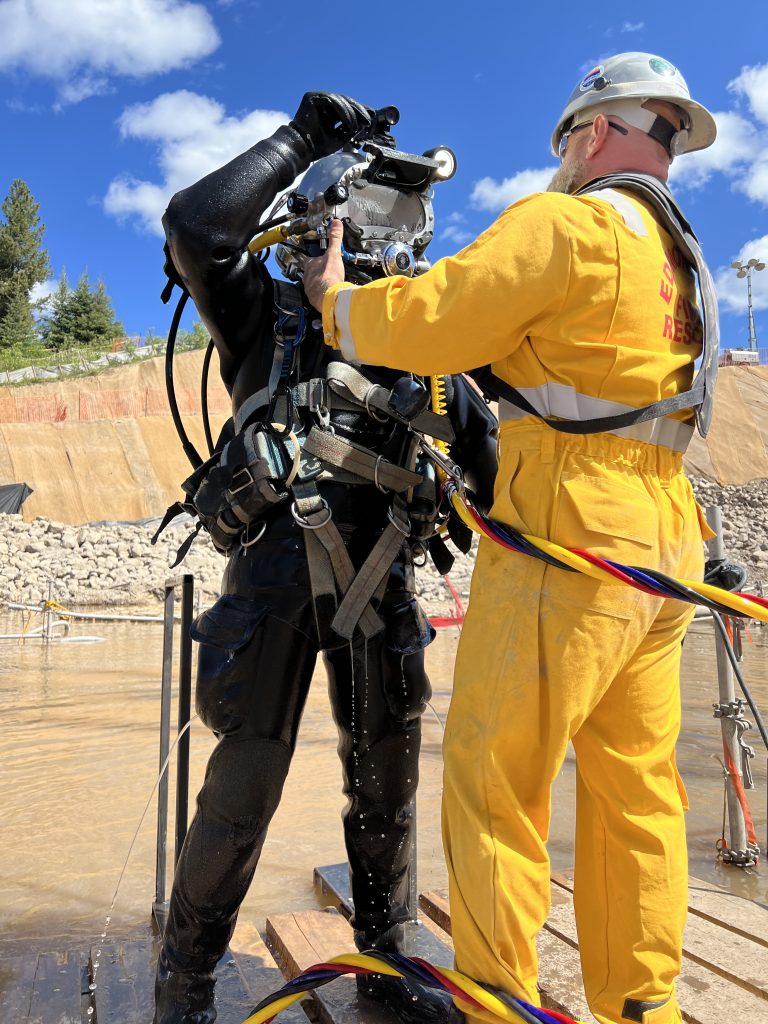
Strategic Interventions That Extend Asset Service Life
Targeted subsea maintenance interventions yield measurable extensions in structural service life, maximizing the initial capital expenditure of marine infrastructure.
Cathodic Protection and Corrosion Mitigation
Installing sacrificial zinc or aluminum anode systems on submerged steel structures costs a fraction of complete bulkhead replacement. A properly designed cathodic protection system completely halts steel corrosion in seawater, extending the functional lifespan of sheet piles by 20 to 30 years.
Concrete Encapsulation and Structural Jacketing
Rather than demolishing and rebuilding spalled concrete bridge piers or shipping docks, marine contractors install fiber-reinforced jackets filled with anti-washout grout around damaged pilings. This structural restoration technique returns piles to full load-bearing capacity at a small fraction of total replacement costs.
Integrating scheduled Potable Water Reservoir Inspection into long-term utility management plans ensures that internal column supports, floor liners, and concrete walls receive timely maintenance before major structural degradation occurs.
Long-Term Capital Planning and Regulatory Compliance
Comprehensive subsea maintenance programs provide asset managers with accurate, defensible data required for financial planning, insurance underwriting, and regulatory compliance.
Long-Term Capital Expenditure (CapEx) Planning
Regular diagnostic inspection reports provide engineering data that tracks material degradation over multi-year periods. This data enables finance teams to build accurate long-term capital expenditure plans, avoiding sudden budget shocks.
Insurance Premium Reductions and Audit Readiness
Insurance underwriters demand proof that marine infrastructure is structurally sound before issuing coverage. Detailed underwater inspection records compiled by certified subsea specialists satisfy underwriter requirements, often leading to reduced insurance premiums and complete peace of mind during regulatory audits.
Conclusion
Proactive subsea asset management is one of the most effective financial strategies for preserving public and private marine infrastructure. Replacing costly emergency interventions with scheduled inspections, cathodic protection, pile jacketing, and concrete rehabilitation unlocks significant long-term ROI. Retaining certified subsea engineering specialists protects capital investments, ensures full regulatory compliance, and guarantees that critical marine, industrial, and municipal assets operate safely and reliably for generations to come.